Showing posts with label fictionalized biography. Show all posts

Thursday, February 20, 2020

Elizabeth of Bohemia: The Winter Queen, by David Elias.


In 1596, Elizabeth Stuart was born to James IV of Scotland (soon to be James I of England when Queen Elizabeth I died) and Anne of Denmark. In 1616 she was married to Frederic V, the Elector Palatine of the Rhine (part of the Holy Roman Empire). On his part, it was a love marriage (and they married on Valentine’s Day); she was far less enthusiastic but found him tolerable. She is ambitious; he is not.


They lived happily in Heidelberg for a while; Elizabeth had 13 children. When the Bohemians overthrew their king, Ferdinand, Frederic was elected to that post. But his rule only lasted a few months before Ferdinand regained his throne and Frederic and Elizabeth had to flee. The Princes of Orange at the Hague took them in and supported hem. But they were not supported in the style to which they were accustomed, and this grated Elizabeth to no end. She conducted an incessant letter writing campaign, seeking aid from Parliament, her brother Charles (who was now King of England), and the English ambassadors.


It’s an interesting story, and we get to see it from the POV of a largely ignored character in history. But the story drags at times; there is just not enough of Elizabeth’s life that is interesting for a book of this size. I found myself really wishing at times that the author hadn’t made it so detailed, although I did enjoy the parts about Elizabeth and Walter Raleigh, and Descartes.


Elias does a good job of recreating the language of the era. Elizabeth is an important figure in that her descendants went on to become kings and queens of England. Elizabeth just does not come off as a compelling character; her scheming and complaining get very tiring after a while. The death of her beloved brother Henry left her shattered, and perhaps unable to love again. It’s the only explanation for her disregard for her children and husband.

Thursday, March 28, 2019

Josephine Baker’s Last Dance, by Sherry Jones. Gallery Books, 2018


Josephine Baker, born in 1906 to a poor family in St. Louis, was used pretty much as a slave from the time she could walk. Her mother put her out to white families as a live in servant, with Josephine’s pay going to her. Josephine never saw anything of it. Worse, she was sexually abused starting at an early age. But she was determined that she would be a dancer and singer; it was the one way she could see out of her impoverished situation. She just needed to get a chance….She was told by producers that she was too skinny, too dark, and didn’t have a strong enough voice to be a chanteuse. She was relegated to the chorus line in all people of color reviews.


But in 1925 she sailed to Paris and started breaking down barriers. She was the first woman of color on a Paris stage, the first to star in a movie, the first to sing in an opera. But her most famous act is, sadly, something that started as sarcasm. She was designing her own costumes in Paris. The man in charge, however, thought she was trying to dress too elegantly. So she drew her next costume as a skirt (a belt, really) of bananas and nothing else. That, of course, is what the costume maker produced and that is what she danced in for many performances, and that is the picture that will come up first when you Google her.


In Paris she was received as an equal, not some subhuman servant like she was see in the US. She was the center of any party, the star of the stage. She rubbed elbows with the American ex-pats. Of course, the Nazis came and everything went to hell. So she did what any rebel would do- she joined the French Resistance. As a star and party giver, she had access to the Nazi bigwigs who didn’t know she spoke German. She risked her life giving information to the Resistance- and then spent time flying supplies for the Red Cross.


This was all exciting. After the war she led a much quieter life. She adopted 12 children, of different races and cultures. She tried to come back to the US, but found herself denied service in restaurants and denied rooms in hotels. She was treated like dirt.


I loved the book, but the last part of her life was rushed over. What became of all her children? What kind of relationships did she have with them? After her last big performance- a production that frames the story- what did she do? I know she worked for equality.  How did she die? Who was with her then? But it’s still a five star book, because I couldn’t put it down. She was a fascinating woman, and lived her life to the fullest.

Tuesday, February 12, 2019

American Duchess: A Novel of Consuelo Vanderbilt, by Karen Harper. William Morrow, 2019


Consuelo Vanderbilt was brought up strict by her socialite mother, Alva. Taught all the things a society lady was supposed to know, and confined to a corset with a steel rod in the back to make sure her posture was perfect, she was expected to marry well and provide heirs to continue the line. When the Duke of Marlborough showed some interest, a deal- strictly a business deal- was made: Consuelo would get to be an English duchess, and the Duke would get the money he needed to save his palace and live life the way he wanted to. Problem was, Consuelo was already in love with another man. Under threats from her mother, Consuelo gave in and married the Duke. She was now a provider of huge sums of money and of heirs.


Consuelo wasn’t one to just sit around and spend money, though. She was quite the philanthropist, and was active in the women’s suffrage movement. She did her part during WW I, running a sort of hospital. And she finally left her husband so she could live her own life.


It’s an interesting book and I enjoyed reading it. But it has some flaws. First is that Consuelo is flawless; she is never in the moral wrong. Of course, it’s written in the first person, so that’s kind of to be expected. The second is that I feel like the book was possibly written for the Young Adult crowd, even though it is being advertised for adult readers. Finally, there is a bit of a flat affect. None of the characters- not even Consuelo- really come to life. And one (Alva) makes a total 180 degree turn about in character, which seemed odd. Four out of five stars.

Thursday, December 20, 2018

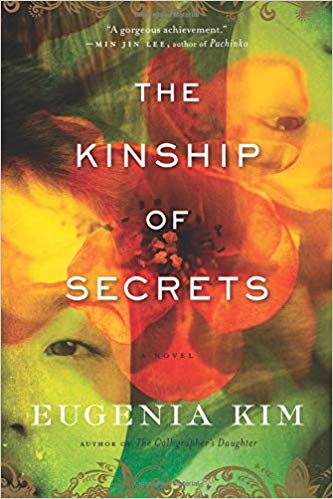
The Kinship of Secrets, by Eugenia Kim. Houghton Mifflin Harcourt, 2018


In 1948, a Korean family is split up. Najin and Calvin Cho want to go to the USA with their two daughters, but money is short and there is the issue of convincing the government that they intend to return. Leaving one daughter will solve both those problems, so they take baby Miran with them and leave Inja with Najin’s family. New born Inja doesn’t miss or remember them; to her, her uncle and aunt are parents. Her grandparents also share the house with them, so she has no lack of family.


When the Korean War breaks out, it makes the possibility of getting Inja out dimmer. Inja and her family find themselves running south from the North Korean troops, and spend time in a refugee camp with nothing to their names. It takes years for them to rebuild their lives again. Meanwhile, Najin sends packages to them every week with money, clothing, and other goods. She doesn’t know that Aunt and Uncle have to sell most of the goods to get enough money for food and necessities. The Chos work endless hours to afford a home in the suburbs as well, and Miran grows up as an American girl, albeit one who knows she is different.


It’s not until Inja is in high school that the Chos find a way to get her out. By then, Inja doesn’t want to go; she has friends, is doing very well in school, and she loves her Uncle and Aunt. She has no desire to see these people she doesn’t know; she speaks little English and her sister speaks no Korean. Miran is shaken by Inja’s arrival; suddenly she has to share everything including her room. Can two sisters so different find their way to love each other?


I loved this book. I felt great sympathy to all of them; they were all doing the best they could in bad situations. I held my breath to see how the sisters would do together; would they get along? Would they come to understand how the other had grown up? Would Inja grow to love her blood parents? The characters are easy to care about. The prose is wonderful. Five stars.

Sunday, December 16, 2018

The Age of Light, by Whitney Scharer. Little, Brown and Company, 2018


In 1929, American Lee Miller moved to Paris to become a photographer. She was not stranger to cameras; she had a career as a model of Vogue, and her father used her as a model from toddlerhood on. But she doesn’t want to be a model anymore; she wants to be a creator of art, rather than someone to be gazed upon. These are the days of the Dada and Surrealist movements, of Picasso and Cocteau. She hasn’t been there long before she meets the much older Man Ray and they soon develop a relationship that is sexual, emotional, creative, and business. He teaches her the art and tricks of photography, while she takes care of the business of his studio. He nurtures her talent, but is very possessive, even, at one point, claiming a technique she developed as his own. She is possessive in some ways, too; she was obsessed with Kiki de Montparnasse, Ray’s ex who had posed nude many times.


Miller is not all about Ray, though. She was a war photographer during WW 2, going into dangerous areas; this is the part of her life she is most renowned for. She later became a 5 star chef and a food writer for Vogue- and also an alcoholic. This is an engrossing story of a woman trying to make it in the world on her own considerable talents, rather than as the wife or mistress of a man. Along with the standards of the time that dismissed women as trivial, she had to fight to overcome having had a pretty creepy father and a childhood rape. I loved the eccentric characters that she knew during the 30s, and the descriptions of the parties and dinners. Miller and Ray are extremely interesting characters, but frequently unlikable ones. The writing is lovely. Four stars.


Sunday, November 18, 2018

The General’s Cook, by Ramin Ganeshram. Arcade Publishing, 2018


Hercules Harkless was a real person; he was the chef for George Washington for many years. As a slave, he had privileges that most slaves didn’t;: he received a decent wage; as long as his work was done he could leave the premises and go to the tavern or the theater; and he wore beautiful clothing. But he was still a slave. He was prohibited from learning to read and write. Even though he spent a lot of time in Philadelphia, which had a law that said any slave that resided in the state for six months was free, this freedom was kept from him by the simple method of rotating him between the Philadelphia house and Mount Vernon every few months. There always existed the threat of being sold or whipped. His daughters were kept at Mount Vernon, keeping him away from them for months at a time.


Harkless ran the kitchen for Washington, although he was under the authority of white servants. He apparently was trained in France, and learned their methods of cooking. He also kept a spotless kitchen, and knew such things as washing the cutting board between working with meat and vegetables (I have no idea if these bits are backed up by history or not).


The story takes place between 1793 and 1797; in 1797, on Washington’s birthday, after preparing things and telling the other slaves what to do, he vanished, never to be found. I like to think that he gained his freedom. The story hints that a free black man set up a tavern that sold exceptional food in New York might have been him. Along with Harkless’s own story line, there are subplots. One is of his oldest son Richmond, who worked under him in the kitchen but did not show an aptitude for the job. Another line is Nate, a young slave who *does* show a talent for cooking, and his relationship with Margaret, a teenaged indentured servant (a temporary slavehood for poor white people). Threaded all through the story is the tension that all slaves lived under, of not being in charge of their lives.


I enjoyed the story although at times it seemed to wander a bit. The author’s ability to describe things, whether sites in Philadelphia, Harkless’s fancy clothing, or- especially- the food he cooks is just exquisite. I was hungry the whole time I was reading because of the food descriptions! The writing in general, though, was a bit rough in places. A number of the supporting cast are not given enough depth. The most important thing, though, is the struggle between being a man who is free to go to the theater with white people and buy nice clothes, while at the same time always being under the whim of his owners, and this is painted vividly. Five stars. 

I received this book free from the Amazon Vine program in return for an unbiased review. This did not alter my opinions. 

Tuesday, October 9, 2018

Jane Seymour: The Haunted Queen, by Alison Weir. Ballantine Books, 2018


Jane Seymour is a Tudor queen about which less has been written; she was a quiet girl, who spent her early years wanting to become a nun. Her home life was rather horrific: her brother’s wife became her father’s mistress. Ultimately she is sent to court to be Lady in Waiting to Henry’s first queen, Catherine of Aragon. She loves Catherine, and dislikes Henry’s adulteries. When he banishes Catherine and declares their marriage null, she is reassigned to Anne Boleyn, whom she despises. When Anne in turn falls from favor, she is flattered but alarmed when the king’s attentions turn to her.


Jane was supposed to be Henry’s favorite queen; she gave him a living son and died before he could get bored with her. He is buried next to her. She was involved with Henry for only 3 years- which was longer, actually, than I’d thought. She left behind no letters and was not involved in politics or religious arguing, so her character can only be surmised from what little others wrote about her. Weir has given us a pious, private girl who was pushed into the king’s path by her family. Sadly, this girl failed to take fire as a character. She comes across as one of those people you don’t pay much attention to in real life.


The first part of the book is very, very heavily entwined with the stories of Catherine of Aragon and Anne Boleyn, because Jane lived through that and knew them, and she was not a history maker until after they were dead. There is a lot of physical details in the book, which bring the time alive, but not, unfortunately, Jane. Three stars.

I received a copy of this book free from Net Galley in return for an unbiased review. This did not influence my review. 

Monday, October 1, 2018

Never Anyone But You, by Rupert Thomson. Other Press, 2018


In the years right before World War One, two teenaged girls meet. Suzanne Malherbe and Lucie Schwob fall in love, which of course they must hide. Then in an odd twist of fate, one’s mother marries the other’s father, making them step-sisters. Now they are free to live together, to put their arms around each other. If this was in a work of fiction I would think it was too much; but this is not fiction, these were real people. After they leave school, they move to Paris where, as part of the Surrealist movement, they fit in, one an artist the other a writer, both adopting male names (Marcel Moore and the gender-fluid Claude Cahun). Their best known works are photographs they collaborated on.


As anti-Semitism penetrates Paris, they move to the Channel Island of Jersey. Now middle aged, no one pays them much attention. When the Nazis occupy the island, they set about their greatest Surrealistic project: subverting the Nazis. As “old women” (barely in their 50s!) they were pretty invisible to the soldiers. They would type up subversive leaflets and sneak them into pockets and cigarette packs. This went on for quite a while before the Nazis figured out it was them. They spent a good amount of time imprisoned by the Nazis, held in solitary, refusing to cooperate. Amazingly, they both survived the war. The Nazis never did believe that the two women were working alone; they felt there *had* to be a network of Resistance fighters behind them!


Thomson tells the story from Marcel’s point of view; she outlived Claude and was the more well-grounded of the pair- Claude seems to have inherited some of her mother’s mental illnesses. The prose is clear and simple, but I felt that Marcel was a somewhat distant narrator. The part of the women’s lives where they are living in Paris, mingling with all the famous people, seemed almost brushed over, as if it were an unimportant interlude, a list of famous names. Things only come to life once they begin their undercover work. Marcel’s focus was always on her beloved Claude, and so other people, no matter how famous, get short shrift. Four stars. 


The above is an affiliate link. If you click through and buy something- anything- from Amazon, they will give me a few cents. 

I received this book free from the Amazon Vine program in return for an honest review. 

Neither of these things influenced my review. 

Saturday, April 28, 2018

Ecstasy, by Mary Sharratt. Houghton Mifflin Harcourt, 2018


I was torn about requesting this book. On the one hand, I love Mary Sharratt. Her writing really resonates with me. On the other, it’s about Alma Schindler Mahler Gropius Werfel. A couple of years ago I read a biography of her, and it did *not* portray her in a good light. It was in agreement with what I already knew of her: she was an anti-Semite, despite having married two Jewish men and having had affairs with others. She was emotionally abusive and controlling. She was, in most every way, a horrid person. But… Mary Sharratt! I had to give it a go. 

Sharratt paints Schindler in a totally different light. We meet a beautiful young woman who is serious about music and composing and longs to take advanced lessons, which her mother and step-father say is a waste of money. She is also wakening to the attractions of me; her first kiss is from Klimt – who her stepfather advises to get the heck away from the underage Alma. When she is given permission to take some more music lessons, she and her tutor fall in love, but they are forbidden to marry as the tutor is a Jew. Later, when she wishes to marry another Jew, composer and music director Mahler, it is all right- he has prestige and money. Her parents demonstrated some unpleasant prejudices to her! 

Head over heels in love with Mahler, she agrees to marry him under his conditions: she must give up her own music and just support him in his career. Take care of the house, the finances, and the kids when they come along, leaving him free to give his total attention to composing and conducting. It’s a brutal compromise. Numerous times, she longs to go back to composing or at least playing the piano, but it is forbidden. She finally has a nervous breakdown. 

I found this Alma Schindler appealing and sympathetic- women are still making the compromise she did these days (so do men, but not as often as women do). This is not the Alma of the biographies. I liked this Alma, and her sacrifice resonated with me. I could see how this could have made her bitter and cynical- ‘Ecstasy’ ends shortly after Mahler’s death, so we don’t see how Sharratt would have dealt with Alma’s later life.

I give the book five stars. Sharratt’s writing style is, as usual, wonderful, and she made a person I was prejudiced against likeable and well rounded.


The above is an affiliate link. If you click through and buy something- anything!- from Amazon, they will give me a few cents. 

I received this book free from the Amazon Vine program, in return for an unbiased review. 

Neither of these things influenced my review. 


Wednesday, December 20, 2017

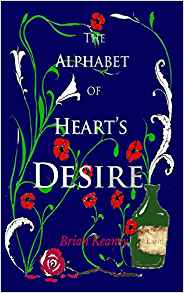
The Alphabet of Heart’s Desire, by Brian Keaney. Holland House Books, 2017


This book follows the stories of three young people in the early years of the 1800s: Thomas de Quincey (later to become author of “Confessions of an Opium Eater); Anne, a child prostitute (a person de Quincey actually knew); and Tuah, a freed slave and avid reader, who, as far as I know, was not a real person. Their stories are told in alternating chapters; Anne and Tuah tell their tales in the first person, Thomas’s is in the third person, which makes him seem a little more distant and less real.

Anne is a pre-teen girl who becomes a prostitute to avoid a fate just as bad with her step-father. Coming from a life of grinding poverty, living in a brothel and being warm and not having to wash load after load of clothes with urine is a step up. Tuah is captured by Dutch slavers who kill and rape his family and friends; the captain of another ship buys him and brings him to London. Along the way he is taught English and how to read. Thomas, whose father dies when Thomas is young, is very bright and his school masters say he should go on to Oxford. Sadly, his mother and her brother, who are controlling Thomas’s inheritance, are too stingy to pay his tuition. After an attempted theft, he is told by them to get out of the area, and disappear for a few years. They give him an allowance that would have been hard for the most frugal of souls to live on. Thus he ends up on the streets, starving and freezing, where Anne finds him.

The stories of Anne and Thomas are closely connected after the middle of the book. Tuah, however, while having the story that I found most interesting, seemed not to really fit in with the other two- he does connect with Anne, briefly, mid-way, and then again at the end. Tuah and Archie, the brother of the sea captain who saves Tuah, are the characters that caught my attention. Archie runs a used clothing store and does fitting; his building is filled with old clothes and books, hundreds of books. Archie reads incessantly, a hobby that does not hurt his hunch-backed body. His gentle humanity, and kindness to both Tuah and Anne, are a stark contrast to many of the other supporting characters.

Oddly, I found Thomas the least interesting of the main characters, even though history tells us the most about him. He just seemed sort of… helpless. He was dealt a bad hand in life, but seemed to be the least able to make a go of it. I was really captured by the book, and I’ll give it five stars even though Thomas was a disappointment. 


The above is an affiliate link. If you click through and buy something- anything- from Amazon, they will give me a few cents. 

I received my copy of this book from Net Galley in return for a fair review. 

Neither of these things influenced my review.  

Friday, December 15, 2017

White Houses, by Amy Bloom. Random House, 2018


Most Americans are aware that Franklin Roosevelt had girls on the side both before and during his presidency, but fewer are aware that Eleanor did, too. This book of historical fiction/fictionalized biography is told from the point of view of Lorena Hickok, Eleanor’s longtime partner. Hickok was raised dirt poor, in an abusive household. She became a journalist and was assigned to cover Franklin’s first presidential campaign. The two felt drawn to each other, despite the wide differences in their personalities and upbringing.

Told from “Hick’s” point of view, the story moves between different times: Hick’s horrible childhood and early working years; the short time when Hick lived in the White House with Eleanor and FDR (and FDR’s girlfriend, Missy LeHand)- Hick was given a job in the administration; an interlude after FDR’s death; and times in between when Eleanor and Hick were separated. While it was all right for FDR’s extramarital relationships to be talked and joked about, it was a different situation for Eleanor. A shroud of secrecy envelopes the two women’s relationship at all times, save for one anonymous getaway on a camping trip.

Bloom went through more than three thousand letters as well as diaries to research this book, so it is meticulously researched, and the prose is marvelous- great descriptives! Eleanor Roosevelt has always been one of my heroes. So I don’t know why, even though I really *liked* the book, I didn’t *love* it. The women never caught fire and came to life for me. Still, definitely four stars out of five. 


 The above is an affiliate link. If you click through and buy something- anything- Amazon will give me a few cents. 

I received this book free in return for an unbiased review from the Amazon Vine program.

Neither of these things influenced my review.