Showing posts with label social criticism. Show all posts

Sunday, December 9, 2018

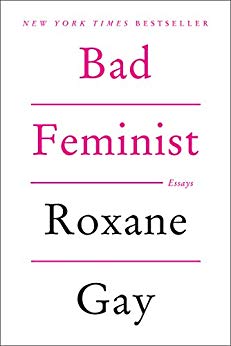
Bad Feminist, by Roxane Gay. Harper Perennial, 2014


Roxane Gay, New York Times opinion writer and university professor, writes about feminism, fat acceptance, homophobia, racism, sexual violence, kink, pop culture, and a lot more in this collection of essays. She doesn’t come across as a know it all like some essayists do; she consistently admits to her own failings and prejudices. She’s funny and insightful at times; heartbreaking at others. Her own brutal gang rape at age twelve is fodder for her writing, as is 50 Shades of Grey and Twilight. The book is a mixed bag.


I have seen a lot of reviewers criticizing this book. One, for the writing not adhering to regular essay format but rather being more like blog posts. Yes, this is true. But I don’t feel that detracts from the content, and they are easy to read and digest. There is a trend among people today to glance at a more formal looking piece and think ‘tl;dr’. The other complaint I’ve seen is that a lot of them are on pop culture. I don’t see why this is a problem. Pop culture is what people are reading/watching. It’s what’s influencing people. Pop culture needs to be written and thought about. She doesn’t solve the feminist problem- she considers herself a bad feminist because she likes pink and she’s not a man-hating, angry woman. Well, I’m a bad feminist, too, despite being right out of the 1970s feminist wave. I, too, like pink, and I love makeup (I am angry, though, a lot of the time).


I loved this book. Is not only funny and thoughtful, she puts herself out there. I came across this book by happenstance, but I’m going to look for her other work now.

Monday, June 6, 2016

Beneath the Wheel, by Hermann Hesse. Bantam Books, 1970 originally published 1906


Young Hans Giebenrath is a gifted child. When the state tests show him to have the second highest score in the country, he earns entrance to a monastery school and becomes the pride of his small farm town. It also earns him a short vacation, which he plans to spend fishing and walking in the beautiful forests. But each day finds his time being taken up by different tutors who wish him to study so he’ll be ahead of the other students when classes begin. Soon all the hours of his day are used up and his leisure is gone.

At the highly regimented school, he has trouble fitting in. He is no longer special like he was in his village. He lacks social skills, so when one of the students, a flamboyant poet, befriends him, he finds himself giddily obsessed and his studies suffer. Eventually he has a breakdown and falls so far behind he is sent home. This is a permanent banishment; no student sent home ever comes back. Suddenly, for the first time, he is at loose ends; there are no lessons to learn, books to read, or tests to prepare for. For the first time, he actually has choices. Can Hans learn to live happily without a highly structured life?

While this book was written in 1906, I see the same thing still happening to gifted kids today (and regular kids whose parents want them to be gifted); they are given so many classes and structured activities that they have no time for play, socialization, or imagination. While most survive it okay, I can’t believe it’s the best way to raise a child.


Monday, March 28, 2016

The Geography of Nowhere: The Rise and Decline of America’s Man-Made Landscape, by James Howard Kunstler. Touchstone, 1993


This very interesting book looks at city planning and architecture, and how they have both failed to produce cities that people actually want to live in, and that are sustainable over the long run. He hates suburbs and shopping malls and big box stores; most of all, he hates privately owned automobiles. He likes small towns. He likes mixed use areas. He likes public transit.

I agree with him on almost all these things. Kids in suburbs are kind of trapped with no place to go unless mom drives them. There is no corner store or movie theater a few blocks away they can walk to. If you need a carton of milk when you live in one of those developments, you have to get in the car and drive to the nearest shopping center, which sits in a sea of parking spots. Because stuff is so spread out, public transportation won’t pay for itself, and no real community is built between people.

Modern zoning doesn’t allow mixed use- there are no apartments over little stores so people can live close to a job. There are no small factories in between eating places and stores. When faced with undeveloped or farm land, planners think to preserve the rural feeling by making building plots of 5 or 10 acre minimum, but this doesn’t work. It’s really hard for a farmer to keep using that 5 or 10 acres when it’s fenced off from other plots, and is bisected by a driveway, and has a house in the middle with a lawn and garden. We face that where I live; owners want their 5 acre lots hayed but farmers find the odd shaped plots that are left after people build too difficult to maneuver cutting and baling equipment in. It’s green space, but it’s not feeding anyone anymore. And it’s not green space that the public can use, either.

Written more than 20 years ago, Kunstler’s observations are still valid. Nothing has changed other than that we’re even closer to running out of fossil fuels and urban slums are getting bigger. Municipal buildings and shopping areas are still ugly. More suburban developments have been built. More big box stores have run small business out.  The problem with the book are two things: one, the author presents few solutions although he does show a few; and, two, he’s a bloody snob. He puts down the majority of the population as not having any taste or class; he makes statements about the poor that make me, a poor person all my life, wish I could have a few harsh words with him. But despite these things, I feel his book should be required reading for anyone going into architecture, city planning, or being a small town/county politician. What he points out should be obvious, but people just don’t see it because they are so used to it. There *are* options to the way we live today.


The above is an affiliate link. If you click through and buy something- anything- Amazon will give me a few cents. This in no way influenced my review. 

Friday, January 11, 2013

The Accursed, by Joyce Carol Oates. Harper Collins, 2013


I’m a big fan of Joyce Carol Oates, so when I discovered she had a new book out, I was excited. I was even happier when I found that it was another volume in the gothic family saga series she started many years ago with ‘Bellefleur’, which is one of my favorite books. The 660 page length didn’t bother me; she’s an author who, at her best, can fill that many pages with brilliance. I greeted the book like it was a big box of candy.  

I’m afraid I was disappointed. There are a lot of good things in the book-an extended patrician family living in Princeton is cursed. Voices say bad things to people, ghosts are seen, a shape shifting demon walks among them and leads them into tragedies. At the same time, they have to deal with the demons of their everyday life: racism, misogyny, classism, the Machiavellian politics of Princeton University. I liked having a narrator who only knew the story through the diaries and papers he discovered long after the events took place. Half the population of the book are real people: Woodrow Wilson is president of Princeton U, Grover Cleveland and his wife are part of the social circle, Upton Sinclair has a large part devoted to him, Jack London, Theodore Roosevelt and Mark Twain all make appearances. But the lessons about society are a little heavy handed, and I’m really not sure that some of the historical characters added to the story. Upton Sinclair and Jack London didn’t seem to be connected to the family and the curse but took up a lot of pages. The only way I could see that they added to the story was by showing the reader what the attitudes of people of the time were, but I know enough history that I didn’t need that and I’m sure there are many other readers like me.

Oates has written a great story, but every story needs an editor. At least a hundred pages could have been cut without the story losing anything and the book would have been much sharper. I enjoyed the book, but got impatient with it frequently. 


Saturday, November 17, 2012

The Witch of Exmoor, by Margaret Drabble. Harcourt, Brace & Co., 1996


‘The Witch of Exmoor’ begins with the adult children of Frieda Haxby Palmer having a weekend together for the purpose of deciding what to do about their mother. She has, they feel, lost her mind or gone senile. The problem is, there is not one sign that she is incompetent, except by the standards of her upper middle class, consumerist children. What they call signs of a failing mind are selling the house they grew up in, suing the government over tax issues, making a public investigation and scene over a manufacturer of over processed foods, and moving to a rambling, falling apart white elephant on the coast far from ‘civilization’. And embarrassing them in the process of all that. That’s the worst; the embarrassment and the worries over what she might be doing with their future inheritance. Frieda doesn’t care what they think; she’s never been an attentive mother; when they were young, she was busy writing and earning a living, now they mostly bore her so she doesn’t bother with them. The only family members she cares to interact with are her son-in-law, who believes in social activism, and his son, who is bright and curious and has so far avoided becoming average. Her children feel she is a monster because of her past and current inattentiveness. They really have no idea how she spends her days and who her friends are.

The characters are close to caricatures:  the moral-less lawyer, the good wife who hides concerns in a Martha Stewart existence, the bad child (drugs), the good child (does what her family wants), the poor man who has no chance at an equitable life because of the circumstances of his birth, etc. Frieda is the character who is best filled out; she is like a 1960s hippie and feminist who has grown into old age with her values intact; we find more and more about her as the book goes on, like peeling an onion.

The book is really less a family novel (although it is that) than it is a social commentary that is as apt today as it was in 1996. Britain is still trying to figure out how to fix the NHS, human rights are still being trampled everywhere. Corporations are still soulless entities who will do anything for a profit.

I really enjoyed this book. I wanted to know more about Frieda; she’s a woman with a sense of adventure, one whom I would like to sit down and have a drink and a good conversation with. She’s a real person in a cardboard world.