Showing posts with label popular culture. Show all posts

Sunday, December 9, 2018

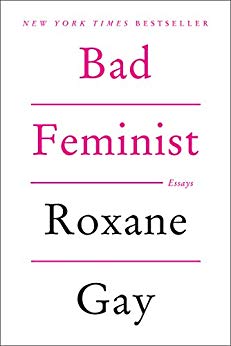
Bad Feminist, by Roxane Gay. Harper Perennial, 2014


Roxane Gay, New York Times opinion writer and university professor, writes about feminism, fat acceptance, homophobia, racism, sexual violence, kink, pop culture, and a lot more in this collection of essays. She doesn’t come across as a know it all like some essayists do; she consistently admits to her own failings and prejudices. She’s funny and insightful at times; heartbreaking at others. Her own brutal gang rape at age twelve is fodder for her writing, as is 50 Shades of Grey and Twilight. The book is a mixed bag.


I have seen a lot of reviewers criticizing this book. One, for the writing not adhering to regular essay format but rather being more like blog posts. Yes, this is true. But I don’t feel that detracts from the content, and they are easy to read and digest. There is a trend among people today to glance at a more formal looking piece and think ‘tl;dr’. The other complaint I’ve seen is that a lot of them are on pop culture. I don’t see why this is a problem. Pop culture is what people are reading/watching. It’s what’s influencing people. Pop culture needs to be written and thought about. She doesn’t solve the feminist problem- she considers herself a bad feminist because she likes pink and she’s not a man-hating, angry woman. Well, I’m a bad feminist, too, despite being right out of the 1970s feminist wave. I, too, like pink, and I love makeup (I am angry, though, a lot of the time).


I loved this book. Is not only funny and thoughtful, she puts herself out there. I came across this book by happenstance, but I’m going to look for her other work now.

Saturday, October 14, 2017

Everybody Had an Ocean: Music and Mayhem in 1960s Los Angeles, by William McKeen. Chicago Review Press, 2017


While this book covers the Los Angeles music scene of the 60s, the backbone of the book is the story of the Beach Boys. Beginning with their early teen days of using music to keep their brutal, abusive, father from beating them, to the days when they worked with Jan and Dean, and then the LA studio musicians that were known as the Wrecking Crew (a crew that included Glen Campbell and Leon Russell), the book takes side roads through music other than surf pop. The Greenwich Village folk scene that spawned Judy Collins, Bob Dylan, and Cass Elliot. The “race music” that black musicians were putting out, mainly in the south. The various permutations Crosby, Still, Nash and Young, including bands before, during, and after. Frank Sinatra, which rather baffled me, although he was producing music that got played on the rock stations (and a chapter on how his son was kidnapped). Phil Spector and his Wall of Sound. The sex and drugs. How Charles Manson drifted around in the music world, living in Dennis Wilson’s house with his who knows how many girls, and getting a recommendation from Neil Young (the producer passed). Through the various chapters, the story returns again and again to the Beach Boys. The final chapter updates us on what happened to all those people, ending, as it began, with Brian Wilson.

I picked this book up as being of just passing interest; I was never into the surf and car music of the early 60s. But I saw that it was about more than that, so I figured I’d give it a try. I ended up not being able to put it down. It seems like the entire rock music industry was interconnected. It’s well written, entertaining (albeit depressing a lot of the time, but that’s what happened), and apparently well researched. This isn’t a memoir from someone who was there; McKeen is a professor of journalism, so I assume he takes a neutral approach to the material. Five stars. 


The above is an affiliate link. If you click through and buy something- anything- from Amazon, they will give me a few cents. 

This in no way influenced my review.  

Sunday, July 3, 2016

High on Rebellion: Inside the Underground at Max’s Kansas City, by Yvonne Sewall-Ruskin. Open Road, 1998, re-released 2016


Max’s Kansas City sounds like a name for a steak house, and up front, that’s what it was. On the first floor in the front area, they served surf and turf and had a well-stocked bar. But it was a lot more than that; it was ground zero for the changing arts and music scene of the 1960s and 70s and saw the birth of glam and punk. Owner Mickey Ruskin liked artists, and the club became their hangout. If he thought their work had promise, he’d let them run up unpaid tabs or take artworks in lieu of payment. Soon Andy Warhol, the Velvet Underground, and the Factory regulars were ruling the arts scene from Max’s back room; the drag queens were welcome there when they weren’t in many other places. Lots of musicians started coming in, and it soon became a place where anything could- and did- happen. Sex and drugs in the bathrooms, peeing in the phone booths because the bathrooms were taken, blow jobs under the tables, fights, and waitresses in crotch high skirts were all common. Beat writers were there. Amazing new music started showing up as well as visual art; Bowie, Springsteen, Bob Marley and the Wailers, Aerosmith, Tim Buckley, Iggy Pop, Patti Smith (both she and Janis Joplin would be turned away at the door the first time they showed up, Ruskin saying they were too dirty), Alice Cooper, Lou Reed, and the New York Dolls were all there regularly- Debbie Harry was a waitress there before achieving success with Blondie. Ruskin had a talent for working the door; he could sense who would fit in and who wouldn’t, and would turn lots of people away. It was high art and low life, and it was deeply mourned when it closed down because of the debts Ruskin had and his increasing drug use. Everyone spoke highly of Ruskin, even though he was an anti-Semite, a bigot, and a misogynist.

The story is told in snippets from all sorts of people who’d been there. Everyone from Lou Reed to Ed Koch to Halston to ex-waitresses to Abbie Hoffman to Holly Woodlawn have short bits of recollections in the book. It’s all loosely held together by memoirs of Yvonne Sewall-Ruskin, a former waitress who ended up marrying Ruskin and having children by him. There are lots of photos. I found it mostly an interesting, if uneven, read although I did get bored a couple of times. Given my interest in pop culture I’m not sure how I got to be this old without knowing about Max’s.


The above is an affiliate link. If you click through and buy something- anything- from Amazon, they'll give me a few cents. 

I received this book free from Net Galley in return for an unbiased review. 

Neither of these things influenced my review.