Showing posts with label poverty. Show all posts

Friday, March 8, 2019

The Five: The Untold Lives of the Women Killed by Jack the Ripper, by Hallie Rubenhold. Houghton Mifflin Harcourt, 2019


In 1888, five women were killed by the person who would be called Jack the Ripper. The killings were horrific- they weren’t just killed, but disemboweled- and the newspapers of the time made a mint writing sensational stories about them. They characterized the women as ‘prostitutes’, and nothing more was known about them. The image was that they were out on the street and were slain while working. In reality, while all the women were frightfully poor, only one was a sex worker, and she was killed in her bed at home.


The author brings the five women to life. I was amazed at how much could be learned about these women from existing records. Census records, records in the old workhouses, prison records, pension records, ledgers for various businesses, military discharge papers, school records, registers of births, deaths, and weddings- she must have spent a huge amount of time, combing through these primary resources. Then a huge number of books that were about conditions in Victorian days, which painted the backdrop for the lives of these women. It turns out that they led hard lives; that they had been homeless at times and had to sleep outside, they had been in workhouses, that they were all victims of alcoholism, and that society was pretty much set up against them from the start. The poor rarely had access to schooling, so jobs other than manual labor were closed to them. Women were paid very little for their labor; they almost had to have a man for the income if they wanted to live inside. If their man cheated, beat them, spent all the money on alcohol, or left them, they were up creek. One of the women *did* have a man, but on her last night there was only enough money for one of them to sleep inside, and it was her turn to sleep outside.


This book portrays them women who didn’t always make the right choices, but they had precious few to choose from. They had all the hopes, dreams, and cares that everyone has; they were not just put on earth to be victims of the Ripper. It’s about time they are shown to be human beings. ‘The Five’ does this admirably.


Tuesday, February 26, 2019

Nickel and Dimed: On (Not) Getting by in America, by Barbara Ehrenreich. Metropolitan/Owl Books, 2001


Way back in 1998, author Ehrenreich decided to go and try and live like the lower class did. Allowing herself a car and a $1000 in startup money, she went out to land a working class job- waitress, hotel maid, house cleaner, nursing home aide, Walmart associate- and survive on the wages. She discovered how wages didn’t cover rents, or much food, or any way to relax. Most people were working two or even three jobs just to survive. Most often, there was no affordable housing near any source of employment, and there was no affordable transportation. If a worker got ill or injured, they had no option other than to just keep on working. The working class can’t afford to miss work, even if the doctor visit was covered by insurance- and it usually wasn’t back then. Affordable child care simply didn’t exist.


Of course, she wasn’t stuck in this situation. She could tap out at any time and go back to her normal existence. She didn’t live with the knowledge that she would have to live this existence for the rest of her life, with no vacation, no retirement. So she didn’t develop the despair and depression that plagues so many working class people. But she noticed it and reported it. Many people have torn down the author for ‘slumming’, because she could leave, but I feel she wrote an important book because many people were unaware of the situation the working class faced. One person could scarcely cover the entire problem. I did find some things irritating- her fear that she wouldn’t be able to ‘pass’ as a working class person, that her education would out her. Guess what- not every working class person speaks poorly, and there are such things as libraries that allow even the poor to read. One thing that I feel is important about this book is that it showed to the upper classes (if they choose to read it- hah) that even one of their own, a hard working educated woman, couldn’t make it in the system. So much for calling the working class ‘lazy’!


These days, there is a lot more awareness of the problems of the working poor- but I’m not sure there is any more being done about it. Rents are higher, gasoline costs are higher, but wages are the same as they were 20 years ago. There are still huge numbers of people without health insurance. Perhaps it’s time for a reissue of this book, with an update? Five stars.

Wednesday, December 20, 2017

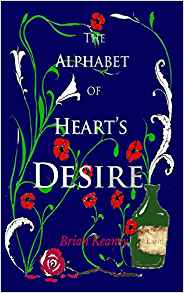
The Alphabet of Heart’s Desire, by Brian Keaney. Holland House Books, 2017


This book follows the stories of three young people in the early years of the 1800s: Thomas de Quincey (later to become author of “Confessions of an Opium Eater); Anne, a child prostitute (a person de Quincey actually knew); and Tuah, a freed slave and avid reader, who, as far as I know, was not a real person. Their stories are told in alternating chapters; Anne and Tuah tell their tales in the first person, Thomas’s is in the third person, which makes him seem a little more distant and less real.

Anne is a pre-teen girl who becomes a prostitute to avoid a fate just as bad with her step-father. Coming from a life of grinding poverty, living in a brothel and being warm and not having to wash load after load of clothes with urine is a step up. Tuah is captured by Dutch slavers who kill and rape his family and friends; the captain of another ship buys him and brings him to London. Along the way he is taught English and how to read. Thomas, whose father dies when Thomas is young, is very bright and his school masters say he should go on to Oxford. Sadly, his mother and her brother, who are controlling Thomas’s inheritance, are too stingy to pay his tuition. After an attempted theft, he is told by them to get out of the area, and disappear for a few years. They give him an allowance that would have been hard for the most frugal of souls to live on. Thus he ends up on the streets, starving and freezing, where Anne finds him.

The stories of Anne and Thomas are closely connected after the middle of the book. Tuah, however, while having the story that I found most interesting, seemed not to really fit in with the other two- he does connect with Anne, briefly, mid-way, and then again at the end. Tuah and Archie, the brother of the sea captain who saves Tuah, are the characters that caught my attention. Archie runs a used clothing store and does fitting; his building is filled with old clothes and books, hundreds of books. Archie reads incessantly, a hobby that does not hurt his hunch-backed body. His gentle humanity, and kindness to both Tuah and Anne, are a stark contrast to many of the other supporting characters.

Oddly, I found Thomas the least interesting of the main characters, even though history tells us the most about him. He just seemed sort of… helpless. He was dealt a bad hand in life, but seemed to be the least able to make a go of it. I was really captured by the book, and I’ll give it five stars even though Thomas was a disappointment. 


The above is an affiliate link. If you click through and buy something- anything- from Amazon, they will give me a few cents. 

I received my copy of this book from Net Galley in return for a fair review. 

Neither of these things influenced my review.  

Wednesday, April 13, 2016

Marvel and a Wonder, by Joe Meno. Akashic Books, 2015


This is a very brutal story, very different from what I’d normally read. But something in the description kept me coming back to look at it, and finally I couldn’t resist. I’m glad I didn’t; once I started reading the book, I couldn’t put it down.

Jim Falls, widower and chicken farmer, is fighting a losing battle with the bills. The electricity is about to be shut off. His daughter is a drug addict who steals things from her dad and eventually abandons her 16 year old son as she chases the next high. The son, Quintin, is biracial with no idea who his father is. He is, despite his chaotic upbringing, a sweet youth. Extremely lonely – not much company for a biracial kid in a rural Indiana town that is economically dead- he plays video games and listens to NWA when not helping his grandfather with the chickens. He doesn’t actually have attitude; he cries when chicks die and demands they be given funerals.

Then a mistake by a legal firm executing an estate results in a gorgeous white quarter horse arriving on the farm. Rodrigo, the illegal worker on the farm, is the only one who knows what to do with a horse. The horse is a thing of beauty, and it turns out that the horse runs like the wind- and might be a way out of poverty for the Falls. Things are finally looking up. But of course this is a book where nothing can go right, and the horse is promptly stolen from the Falls, and Jim is shot. But Jim, veteran of the Korean War, is not going to let that stop him from getting that horse back. The main bulk of the book follows the multi-state pursuit, and the point of view switches between Quintin, Jim, the people who stole the horse, the soulless guy who takes the horse from them, and the girl that same guy is forcibly bringing back to her grandfather. The way it’s put together had me breathless to know how it was going to end, because so many forces were coming together. In the end, it’s a story of a growing relationship, a boy coming of age, of right against wrong. I might not have much liked the characters at the beginning, but in the end, I cared deeply about them. It’s brilliant.  


The above is an affiliate link. If you click through and buy something- anything- Amazon will give me a few cents. 

I received this book free from the Amazon Vine program in return for a review. 

Neither of these things influenced my opinion or review.  

Sunday, June 29, 2014

The Victorian City: Everyday Life in Dicken’s London, by Judith Flanders. Thomas Dunn Books, 2012


 This 520 page book is huge in scope, although the last 100 pages are notes, index, and bibliography. It covers the London roads, theaters and entertainments, eating habits and places, the huge number of street sellers (and how specialized they were!), the waterways, rail (above and underground), the fire brigades, the nearly complete lack of sanitation, and more. The London of Dickens’ day was a horrible place (I knew it was bad, so that was no surprise; the surprise was the degree of badness) if you were poor. And it is mostly through the lens of poverty or near poverty that we look through to see this old London; Dickens’ stories were full of the poor. We see the prisons, the slums, the places where the poor ate, the horrible living conditions. This is not ‘Victorian London’ in general (Dickens’ life & writing started well before Victoria ascended the throne). These are the places that we now think of as ‘Dickensian’- oddly enough; when he was alive, a Dickensian story was one with humor in it. It wasn’t until the horrible conditions were alleviated that ‘Dickensian’ came to mean what it does today.

This is a very well researched volume with almost 20 pages of bibliography- the majority of it primary sources- that brings old London to vivid, unpleasant life. While Flanders writes clearly and fluidly, the amount of detail can make this book slow reading. It’s interesting enough to read it cover to cover (I did) but it’s indexed so well and goes into such depth that it would make a great research book for someone writing fiction about the era. It would also be a good companion volume for someone reading Dickens and wants more detail. While, as I said, it was a slow read, it was fascinating. I just won’t be able to think about a Dickens Fair with the same amount of cheerfulness as before! 


The above is an affiliate link. If you click through and buy something, Amazon will give me a few cents. Amazon provided this book to me in return for an unbiased review. Neither of these things affected my review. 

Saturday, February 9, 2013

The Painted Girls, by Cathy Marie Buchanan. Riverhead Books 2013


The story starts in 1878 Paris, in the slums where the van Goethem sisters live with their alcoholic, recently widowed mother. Sources of income are few and far between; the mother works long hours of hard labor at a laundry and doesn’t make enough to feed the family. In the France of this era, there is no safety net for the poor and young girls are pretty much regarded as useless, evil parasites. The girls go to the Paris Opera, taking ballet lessons and hoping to get hired by the Ballet, where they will not only be paid a semi-decent wage but will be exposed to men that can afford to keep them, a way out of the gutter.

Antoinette, the oldest at 17, has had her chance and proved not a good enough dancer. Now she must find another way to earn money, and her two younger sisters, Marie, 14, and Charlotte, 7, will make their attempts at the Ballet.

Marie gets lucky, in a way: Edgar Degas, not yet a famous artist, wants her to model for him. She is paid well for this, although it exposes her to a man who says he is an artist but never seems to actually draw during modeling sessions. Antoinette finds various employment, and finds herself in her first love relationship with a young man who gets accused of murder. The story is told from Antoinette’s and Marie’s points of view in alternate chapters, and their stories twine around each other as they try to find happiness in a world that despises them and are tested to their limits of what they’ll do for love. Through the story runs the theory of the time, that a person’s facial features show their inner selves. People with low foreheads, bad teeth, and forward thrusting jaws are branded as stupid, lazy, and natural criminals.

The van Goethem sisters were real; Marie was the model for Degas’s famous sculpture ‘Little Dancer Aged Fourteen’. Charlotte danced with the Ballet for years, advancing to the rank of sujet, a part time soloist. Antoinette’s lover was also real, although chances are the two never met in real life. There are two main themes in the book: sisterly love, and the way the poor were treated at the time. The girls and the streets of Paris come to life in these pages. I rooted for them all the way and stayed up late reading.