Showing posts with label Korean historical fiction. Show all posts

Thursday, December 20, 2018

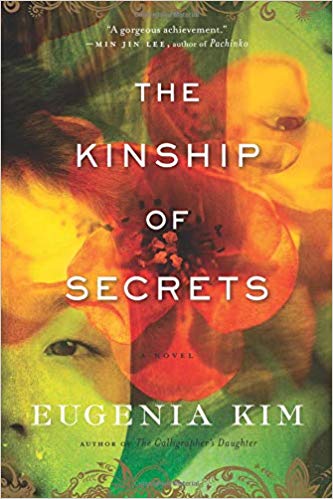
The Kinship of Secrets, by Eugenia Kim. Houghton Mifflin Harcourt, 2018


In 1948, a Korean family is split up. Najin and Calvin Cho want to go to the USA with their two daughters, but money is short and there is the issue of convincing the government that they intend to return. Leaving one daughter will solve both those problems, so they take baby Miran with them and leave Inja with Najin’s family. New born Inja doesn’t miss or remember them; to her, her uncle and aunt are parents. Her grandparents also share the house with them, so she has no lack of family.


When the Korean War breaks out, it makes the possibility of getting Inja out dimmer. Inja and her family find themselves running south from the North Korean troops, and spend time in a refugee camp with nothing to their names. It takes years for them to rebuild their lives again. Meanwhile, Najin sends packages to them every week with money, clothing, and other goods. She doesn’t know that Aunt and Uncle have to sell most of the goods to get enough money for food and necessities. The Chos work endless hours to afford a home in the suburbs as well, and Miran grows up as an American girl, albeit one who knows she is different.


It’s not until Inja is in high school that the Chos find a way to get her out. By then, Inja doesn’t want to go; she has friends, is doing very well in school, and she loves her Uncle and Aunt. She has no desire to see these people she doesn’t know; she speaks little English and her sister speaks no Korean. Miran is shaken by Inja’s arrival; suddenly she has to share everything including her room. Can two sisters so different find their way to love each other?


I loved this book. I felt great sympathy to all of them; they were all doing the best they could in bad situations. I held my breath to see how the sisters would do together; would they get along? Would they come to understand how the other had grown up? Would Inja grow to love her blood parents? The characters are easy to care about. The prose is wonderful. Five stars.

Saturday, October 7, 2017

White Chrysanthemum, by Mary Lynn Brecht. G.P. Putnam’s Sons, 2018


In 1943, sixteen year old Hana is happy with her life as a newly fledged haenyeo woman, free diving for abalone, urchins, oysters, and more in the waters of Jeju, a small island off by what is now South Korea. All her life, Korea has been under Japanese occupation. Her people are required to speak Japanese and obey the Japanese soldiers. It’s a hard life, but her family is happy.

Then one day as she is swimming in to the shore, she sees a Japanese soldier making his way down the beach, where her little sister sits, watching their catch, hidden by some large rocks. It’s only a matter of minutes before he discovers Emi, and young girls are frequently taken by the soldiers, taken to be ‘comfort women’ in military run brothels. Hana runs to the beach, allowing herself to be taken instead. Thus begins her life in hell; life as a sex slave, raped over and over again by Japanese soldiers in a tiny room from which she’s rarely allowed out of.

The story alternates point of views between Hana as she strives to find a way to escape, and Emi, in 2011, who has never forgotten her sister and has never stopped looking for her. Her life, too, has been miserable; Korea’s constant state of occupation and war has not made life easy for anyone. Now she comes to Seoul, to see her grown children and to attend a Wednesday Demonstration- the weekly protest aimed at getting justice from Japan for the sex slave business they were in. She comes, hoping against hope to see her sister. Her children have no idea that their aunt was a sex slave; it shocks them when Emi finally tells them.

The story is, frankly, horrific. But while this volume is fiction, these things really happened to the people of Korea- and the other countries that were under Japanese occupation during this period. The book is really hard to read, because of the subject matter and the verisimilitude of the scenes of sexual violence, but it’s so well written that I just couldn’t put it down. My heart ached for Hana, and for Emi, too. Excellent book, five stars, but could be very triggering for victims of sexual violence. 


The above is an affiliate link. If you click through and buy something- anything- from Amazon, they will give me a few cents. 

I received this book free in return for an unbiased review. 

Neither of these things influenced my review.